
❌

Reading view

The First AI‑Designed Vaccine Has Been Tested in People. Here’s What Happened.

Scientists used AI to find targets shared by thousands of related viruses and build what they hope is a universal vaccine.

Researchers at the University of Cambridge have developed what they describe as a fundamentally new type of vaccine using artificial intelligence. The vaccine’s key component was designed entirely by AI and has now been tested in people for the first time.

The goal is ambitious: a single vaccine that works not just against all known human coronavirus variants, but against related bat viruses that could jump from animals to humans and cause future pandemics.

Traditional vaccines train our immune system to recognize one specific virus. The problem is that viruses mutate. When they change enough, the vaccine stops working, which is why we need a new flu shot every year and why Covid vaccines have been updated repeatedly since 2021.

AI offers a way around this. By analyzing genetic data from thousands of related viruses, it can identify the parts that stay the same across different strains and that are unlikely to change over time. Target those stable features, and you have a vaccine that should work against the whole family, not just the strain you started with.

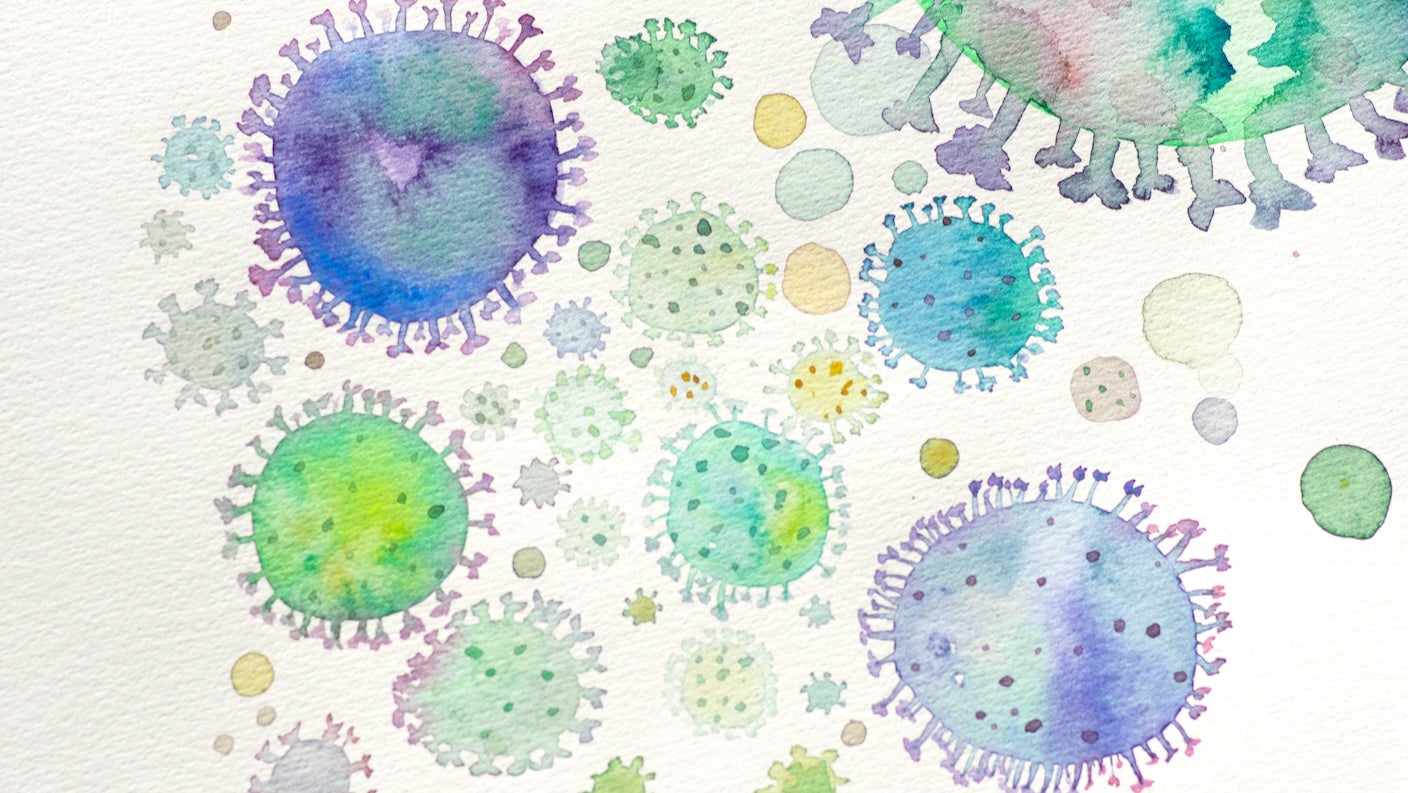
This is exactly what the Cambridge team did. They used AI to scan viruses from the sarbecovirus family, which includes the viruses that cause both SARS and Covid, as well as a range of animal coronaviruses—looking for shared features that evolution has left largely untouched. Those features became the basis of the vaccine.

DNA Vaccines

While many people are familiar with the mRNA shots used during the pandemic, this new vaccine uses DNA. DNA vaccines are generally more stable than mRNA vaccines, making them easier to store and transport. This is a significant advantage in lower-income countries where “cold-chain” infrastructure is limited.

They can also be administered without needles. A high-pressure stream of liquid delivers the vaccine through the skin, making administration less painful and easier to scale up during an outbreak.

Could It Protect Against Future Pandemics?

These practical advantages matter most if the vaccine itself can do something no existing jab can: protect against viruses we haven’t encountered yet.

Broad-spectrum vaccines could change the way the world responds to emerging infectious diseases. By offering much wider protection than traditional vaccines, they could provide rapid immunity against new and emerging viral threats. This would equip public health officials with tools to stop future outbreaks in their tracks before they have a chance to turn into global pandemics.

They could also transform our approach to more familiar diseases. Influenza is a prime target because it exists in many different strains and evolves so rapidly. Scientists have to predict which strains will dominate each flu season, and if they guess wrong, vaccine effectiveness can suffer. A universal flu vaccine that targets features shared across multiple strains could eventually end the annual race to keep up with the virus.

The Ebola virus shows why this matters right now. The recent outbreak in the Democratic Republic of the Congo and Uganda is driven by the Bundibugyo strain, which bypasses existing vaccines. While researchers rush to create a new vaccine specifically for this strain, local communities remain at high risk. A broad-spectrum vaccine designed to cover an entire virus family could transform that picture.

What the Trial Found

This is the first human trial of an AI-designed vaccine. The results showed that this DNA vaccine was able to stimulate the immune system to produce antibodies that can recognize different types of sarbecoviruses. The technology was found to be safe and well tolerated.

This is an exciting advance because it demonstrates how AI has the potential to design variant-proof vaccines against future pandemic threats. The needle-free delivery system could also make the vaccine easier to administer and distribute worldwide.

However, there is more work to do. Although the results in this study are encouraging, the immune responses following vaccination were modest. It was also uncertain how long the protection lasts and whether further boosters will be required. Larger trials are also needed to determine whether the vaccine can prevent or reduce viral infections in the real world.

A universal vaccine remains a few years away. And any new vaccine must still pass larger trials to prove it is safe, effective, and provides lasting protection. But this study shows the goal is getting closer—and AI may help us get there faster.The Conversation

This article is republished from The Conversation under a Creative Commons license. Read the original article.

The post The First AI‑Designed Vaccine Has Been Tested in People. Here’s What Happened. appeared first on SingularityHub.
  •  

Can Psychedelics Reboot Aging Brains? We’re About to Find Out

An audacious trial will test psilocybin in people over age sixty to see if increases plasticity in healthy aging brains.

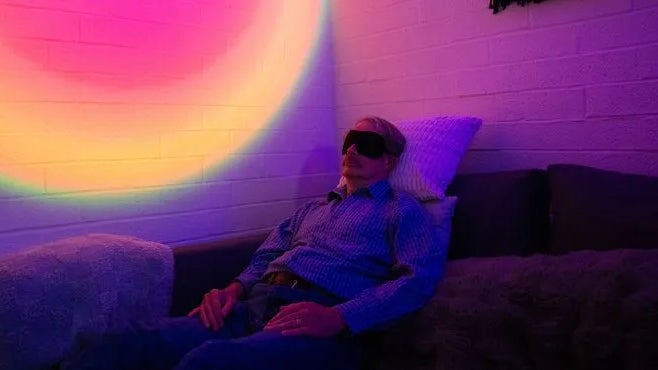
A handful of healthy senior citizens are about to trip on psilocybin—to see if the psychedelic protects aging brains.

Psilocybin, the active ingredient in magic mushrooms, is best known for its ties to 1960s counterculture. But now it may also herald a new genre of mental health treatment. From severe depression to post-traumatic stress disorder, studies have highlighted psychedelic drugs’ ability to reshape brain networks and relieve debilitating symptoms.

Most of these studies have focused on younger people with mental health conditions that don’t respond to standard treatment. The field’s success is prompting scientists to ask if psychedelics could also help healthy brains age better.

A team from the UC Berkeley Center for the Science of Psychedelics is about to find out. In a first-of-its-kind study focused on adults between the ages of 60 and 85, they’ll investigate how psilocybin affects perception, emotion, and memory using a battery of psychological tests.

Multiple scans before and after dosing will track changes in the brain. And detailed surveys will gauge broader shifts in well-being: Do participants feel more “in tune” with their emotions, feel less isolated, or experience a renewed sense of wonder about the world?

“What really excites me is that we’re focused on healthy older adults,”  said Tyler Toueg, who co-led the study’s design, in a press release. “Most clinical trials with older adults are focused on people who already have a diagnosis. We’re asking whether we can actually promote positive outcomes in older adults who are healthy.”

Called PLASTICITY, the trial could also open a rare window into how a psychedelic experience reshapes healthy brain networks. And because the drug alters our sense of self, psilocybin could help researchers probe the ways in which the brain constructs reality.

“I’m very interested in psilocybin as a potential mental health treatment, but I’m also interested in it as a way to shed light on these central mysteries in neuroscience and psychology,” said study designer Michael Silver.

Chasing the White Rabbit

Psychedelic research was highly restricted for decades. But advocates, including the non-profit Multidisciplinary Association for Psychedelic Studies, have steadily pushed to reopen the field, arguing that these drugs might keep mental health symptoms at bay.

Early results helped usher psychedelics into the mainstream. In 2023, a randomized, placebo-controlled trial found that a single dose of psilocybin, paired with therapy, eased depression. Oregon later approved supervised psilocybin therapy—though the drug remains federally illegal in the US—and Australia became the first country to greenlight it for depression and post-traumatic stress disorder. More recently, two late-stage studies reported strong effects in severe depression, potentially paving the way for FDA approval.

Scientists still don’t fully understand how psilocybin works in the brain. But there are hints. The drug appears to rapidly reorganize the connections between brain cells, particularly in the hippocampus, a region of the brain central to learning, memory, and navigation.

Neurons constantly change their connections in a process called plasticity that encodes experiences into neural networks, allowing the brain to process information, learn, and lock in memories. In youth, these connections are flexible and expansive. But with age and in conditions like depression, the brain’s flexibility wanes.

The birth of new neurons, or neurogenesis, also contributes to plasticity. Neurogenesis only occurs in two brain regions, one of which is the hippocampus. Although whether it actually takes place in humans is controversial, it is strongly linked to learning, memory, and emotion, and it declines in both psychiatric disorders and aging.

Psilocybin may reset brain plasticity to a more youthful state.

In rats modeling depression, for example, a study showed the drug shifted dark moods into behavior that was more exploratory and engaging. Where traditional antidepressants, like Prozac, tend to blunt symptoms, psilocybin seems to overwrite entrenched negative patterns. This suggests deeper circuit-level changes.

In another study, the drug reopened a critical window for learning in mice. During adolescence, the brain is highly plastic, but it begins to stiffen in adulthood. Psilocybin temporarily restored malleability and changed the mice’s social behavior. In some brain regions, the drug increased sensitivity to oxytocin, the so-called “love hormone.” The authors suggested the drug induced a state called metaplasticity, in which neurons are more likely to respond to oxytocin and other regulators to rewire, form new connections, and grow their branches.

Psilocybin’s effects may extend beyond the brain. Depression, chronic stress, and the immune system are tightly linked. In a third study, researchers identified a brain-spleen connection that drives fear and anxiety. Psilocybin suppressed inflammatory immune cells associated with brain inflammation and dampened anxiety-like behavior in stressed mice, even under threat.

Both effects—dialing up plasticity and lowering inflammation—make psilocybin an intriguing way to potentially counter changes in the aging brain.

“We know that with age, we lose synaptic connections, especially in certain brain regions like the hippocampus and prefrontal cortex,” said Toueg. “There’s a lot of overlap between the mental states that psychedelics influence and those associated with successful aging.”

Tomorrow Never Knows

The PLASTICITY trial is designed to test whether psilocybin can produce lasting changes in neuroplasticity in healthy adults aged 60 to 85. Participants will first undergo assessments of cognition, visual perception, and brain structure using advanced MRI techniques.

Diffusion MRI scans will focus on the hippocampus to capture microscopic changes in its structure. Functional MRI will focus on brain activity as participants perform learning and memory tasks, offering a dynamic view of how activity shifts after dosing.

The study will also see if psilocybin increases vagus nerve activity, which has been linked to better stress recovery. Participants will complete detailed surveys about the experience ranging from emotional responses, like wonder, to potential shifts in outlook and social cognition.

“Things like depression, anxiety, stress and rumination are all associated with worse aging outcomes,” said Toueg. “Things like having purpose in life, emotional regulation, and awe are all associated with more successful aging.”

The trial began enrolling participants in November last year. Two volunteers have already completed the tests, and the team aims to dose 20 people by the end of 2026.

Although psilocybin trials are now widespread, older adults remain underrepresented. One estimate suggests just 1.4 percent of participants are 65 or older, despite potentially being among those most likely to benefit from interventions that enhance plasticity.

“This study allows us to directly test whether the promising findings from animal models translate to older humans and to generate data that will inform future research on aging, cognition, and mental health,” said Silver.

Toueg agrees. “I think that no matter what we find, this study will have implications for how we think about intervening in the aging brain,” he said.

The post Can Psychedelics Reboot Aging Brains? We’re About to Find Out appeared first on SingularityHub.

  •  
❌