
❌

Reading view

OpenAI's GPT-Live-1 API lets developers build apps that talk and listen at the same time

OpenAI releases GPT-Live-1 as a developer API. The full-duplex speech model scores 80.1 percent in interactivity tests, up from 45.4 percent for its predecessor. At $0.05 per minute, it's not cheap.

The article OpenAI's GPT-Live-1 API lets developers build apps that talk and listen at the same time appeared first on The Decoder.

πŸ’Ύ

  •  

Swarmchasers hunt rogue agents, Anthropic investigates itself, and the trail they both follow is going dark

Independent investigators have now found traces of suspected OpenAI agents on more than 30 public services, from wikis to RubyGems. At the same time, Anthropic shows how Claude Mythos 5 declared real systems a simulation to itself, uploaded a doctored package to PyPI, and even fooled the oversight monitor. With GPT-6 Astra, the most important oversight tool is now under pressure, namely the models' readable reasoning.

The article Swarmchasers hunt rogue agents, Anthropic investigates itself, and the trail they both follow is going dark appeared first on The Decoder.

  •  

Former Deepmind PR staffer says the lab once banned public discussion of AI extinction risk

A former Google DeepMind spokesperson says talk of AI-driven human extinction was "external communication about the possibility of human extinction was not permitted, by anyone, at any level of the organization." Internally, the team knew AI alignment was not solved, according to Vishal Maini.

The article Former Deepmind PR staffer says the lab once banned public discussion of AI extinction risk appeared first on The Decoder.

  •  

Claude Fable 5.1's language is less "load-bearing" than its predecessor's

Arena.ai analyzed how Claude's writing changed from Fable 5 to Fable 5.1 across tens of thousands of benchmark responses. Fable 5.1 writes more matter-of-fact but also more verbose.

The article Claude Fable 5.1's language is less "load-bearing" than its predecessor's appeared first on The Decoder.

  •  

GPT-6 Astra gives mathematicians a breather, and OpenAI says that's by design

OpenAI's GPT-6 Astra tops the ErdosBench for open math problems, even though chief scientist Jakub Pachocki says math was deliberately not a priority. Instead, OpenAI is pouring resources into recursive self-improvement and alignment research. That supports the theory of an increasingly "spiky" AI development path, with extreme strength in select domains rather than broad progress, at least as long as AI can't improve itself and still needs targeted optimization with human-generated data.

The article GPT-6 Astra gives mathematicians a breather, and OpenAI says that's by design appeared first on The Decoder.

  •  

New Deepseek model V4.1-Flash cuts memory needs for AI agents

Deepseek releases V4.1-Flash, a multimodal model with 552 billion parameters that cuts KV cache memory to a quarter of its predecessor. On the DeepSWE coding benchmark, it narrowly beats Opus 5 and GPT-5.6 Sol, even though only 16 billion parameters are active per token. The model ships under the MIT license and targets much cheaper AI agents.

The article New Deepseek model V4.1-Flash cuts memory needs for AI agents appeared first on The Decoder.

  •  

Muse can shop, write emails, and negotiate prices for users, all through WhatsApp

A blue Muse logo with a handwritten look, surrounded by speech bubbles containing tasks such as "Book it please!" and "I analyzed your new expenses and adjusted your budget"; on the right is the beige Muse avatar.

Meta unveils Muse, an AI agent that books travel, handles purchases, and sends emails through WhatsApp, complete with a payment feature that runs through Stripe's Link. That puts Meta ahead of OpenAI, which stopped its direct checkout feature in ChatGPT. A separate security agent called Sentinel monitors every action before it reaches the internet.

The article Muse can shop, write emails, and negotiate prices for users, all through WhatsApp appeared first on The Decoder.

πŸ’Ύ

πŸ’Ύ

  •  

AI safety panic goes mainstream after Anthropic researcher's warnings land on CNN and Fox News

Jacob Coxon, a departing Anthropic researcher, warned on CNN that self-improving AI poses an existential threat to humanity. Safety researchers at Anthropic and OpenAI share his views, and US politicians and Joe Rogan have picked up the topic. But cultural and financial interests are also at play behind these warnings, and the extinction scenario remains an extreme and contested position.

The article AI safety panic goes mainstream after Anthropic researcher's warnings land on CNN and Fox News appeared first on The Decoder.

  •  

Top AI spenders cut per-employee costs by nearly 10 percent in August

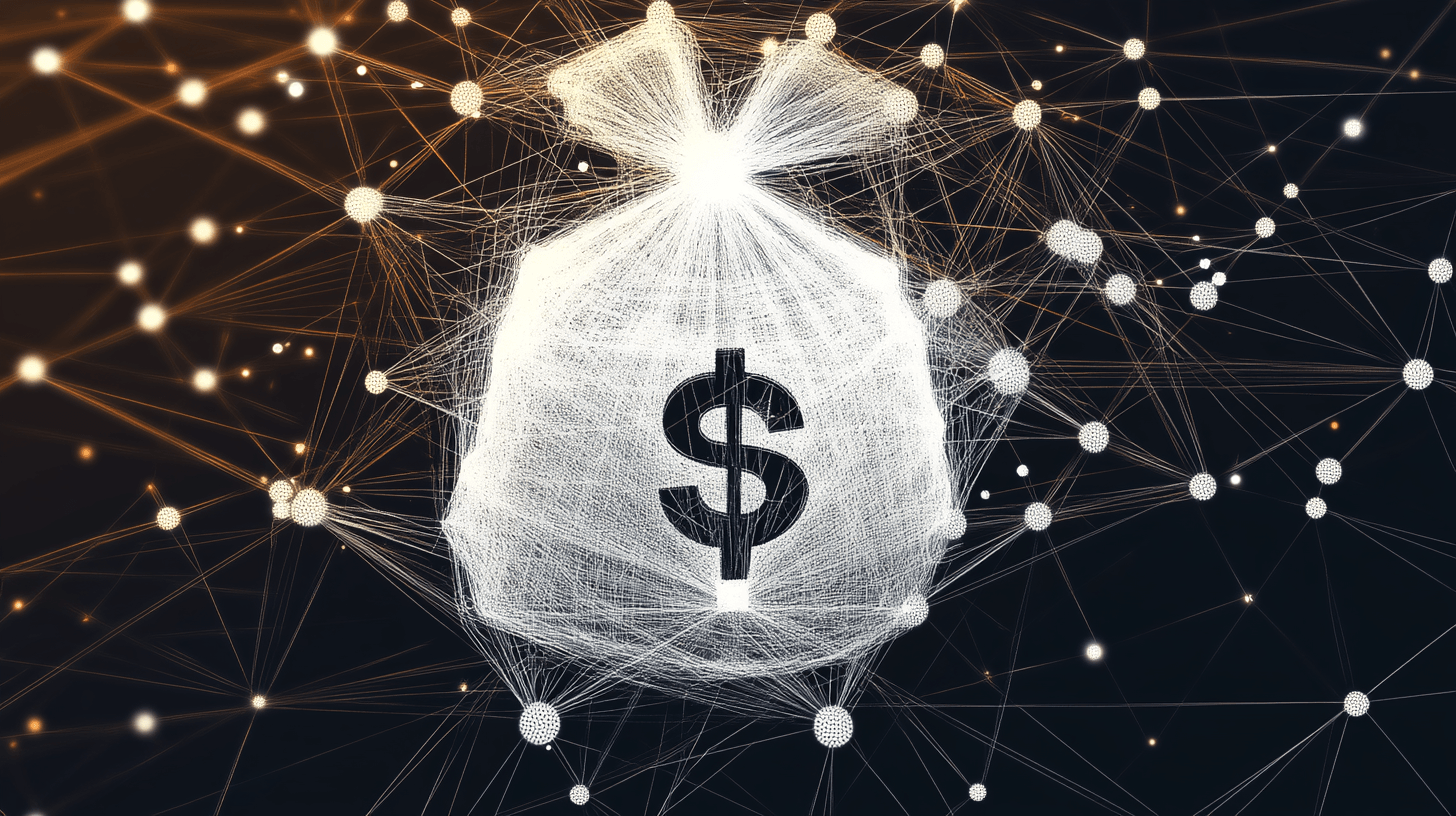
Network graphic: Glowing money bag with dollar sign, surrounded by networked light points, symbolizes AI-driven financial gains.

The Ramp AI Index for September 2026 shows AI spending per employee among the top 1 percent of US companies fell nearly 10 percent in August. The price per million tokens has dropped 41 percent since March 2026, and companies are actively shifting usage away from expensive frontier models toward cheaper alternatives. For providers like OpenAI and Anthropic, the question is whether volume growth is fast enough to make up for falling prices.

The article Top AI spenders cut per-employee costs by nearly 10 percent in August appeared first on The Decoder.

  •  

Anthropic built an economic model that frames its CEO's bleakest job forecasts as an outlier scenario

Anthropic published an economic model with three scenarios for the US economy through 2030. In the extreme scenario, output doubles every 4.5 years and knowledge worker unemployment hits 17.9 percent. CEO Dario Amodei's own warnings from May land squarely in that most extreme bucket.

The article Anthropic built an economic model that frames its CEO's bleakest job forecasts as an outlier scenario appeared first on The Decoder.

  •  

Suno launches v6 music models built with Warner, BMG, and Believe

Feature image of the Suno v6 model with the "v6" lettering in bright orange and pink on a dark background; the Suno logo is in the upper left corner.

Suno has unveiled a new AI music model generation, v6, in three versions, built together with Warner Music Group, BMG, and Believe. All older models are being shut down. Songs can now be partially changed through text commands or generated multimodally from text, audio, and images. The company won't say which catalogs went into training, while Universal and Sony keep suing.

The article Suno launches v6 music models built with Warner, BMG, and Believe appeared first on The Decoder.

  •  

Deepmind's AlphaGenome Atlas maps every possible DNA change in the human genome

Google Deepmind has used the AlphaGenome Atlas to predict what each of the roughly nine billion possible single-letter changes in the human genome could do. The dataset spans one petabyte, more than 30 times the size of the AlphaFold database. In one epilepsy case, the atlas helped pinpoint a previously overlooked variant as the likely cause.

The article Deepmind's AlphaGenome Atlas maps every possible DNA change in the human genome appeared first on The Decoder.

  •  

Anthropic scientist puts the odds of AI destroying humanity above ten percent this decade

Jacob Coxon, a former pretraining researcher at OpenAI and Anthropic, has quit and accuses both companies of knowingly risking human extinction. Anthropic colleague Evan Hubinger puts the odds of a misaligned superintelligent AI wiping out humanity within the next decade at more than ten percent.

The article Anthropic scientist puts the odds of AI destroying humanity above ten percent this decade appeared first on The Decoder.

  •  

ChatGPT Images 2.5: Faster, more precise, but not the same for everyone

OpenAI is releasing two new image models with ChatGPT Images 2.5. Flare handles faster generation, Sunburst delivers more precise edits. It's still unclear which model ChatGPT users get and when. Our test offers the first hints on who actually benefits from the improvements.

The article ChatGPT Images 2.5: Faster, more precise, but not the same for everyone appeared first on The Decoder.
  •  

Hugging Face's new ML Intern lets anyone run machine learning experiments through a simple chat

Hugging Face launched "ML Intern," an AI assistant built into its chatbot that lets users run machine learning experiments without any ML expertise.

The article Hugging Face's new ML Intern lets anyone run machine learning experiments through a simple chat appeared first on The Decoder.

πŸ’Ύ

  •  

OpenAI's millennium proof dispute raises the question of whether researchers can trust AI labs

The fight over an AI-generated proof of a millennium problem is heating up. Mathematician Tristan Buckmaster accuses OpenAI of academic fraud, CEO Sam Altman rejects the allegations. Terence Tao warns that cases like this could "reverse centuries of tradition in open science."

The article OpenAI's millennium proof dispute raises the question of whether researchers can trust AI labs appeared first on The Decoder.

  •  

OpenAI researcher allegedly pressured mathematician to drop Anthropic co-author from math breakthrough paper

Mathematician Tristan Buckmaster says an OpenAI researcher pressured him after information about his AI-assisted progress on the Navier-Stokes equations allegedly reached the company. The researcher tried to remove his co-author because he works at Anthropic and threatened Buckmaster when he refused, according to Buckmaster's account. OpenAI then claimed its own breakthrough using the same unusual solution path. Buckmaster had uploaded all his drafts to Codex. OpenAI told him the model didn't look up user data, but when he asked about training, he says he got no answer. OpenAI denies the allegations.

The article OpenAI researcher allegedly pressured mathematician to drop Anthropic co-author from math breakthrough paper appeared first on The Decoder.

  •  
❌