❌

Reading view

AWS Weekly Roundup: Prime Day 2026 by the numbers, Claude Haiku 5.5, Amazon Nova 2.5 Sonic, and more (October 13, 2026)

Some numbers are hard to picture until you sit with them for a moment. Last week we published the Prime Day 2026 metrics, and the one that stuck with me is 2.3 quadrillion: the daily requests Amazon ElastiCache peaked at during the event. Prime Day ran back in June, so this post always lands as a retrospective, and that gap is part of what makes it worth reading. By the time the numbers reach you, the only evidence that any of it happened is that nothing went wrong.

The rest of the week pulled in a different direction: smaller, cheaper, and more constrained. Claude Haiku 5.5 arrived on Amazon Bedrock at roughly 75 percent less than Haiku 4.5, Amazon Nova 2.5 Sonic made voice agents quicker on their feet, and Strands Box showed up to put real boundaries around what an agent is allowed to do. Now, let’s get into this week’s AWS news…

Headlines
All the numbers: Amazon Prime Day 2026 powered by AWS is the latest entry in a tradition that goes back to 2016, and the scale is still difficult to hold in your head. Over the four days of Prime Day, Amazon DynamoDB processed more than 59 trillion requests while peaking at 192 million requests per second, and kept single-digit millisecond responses throughout. AWS Lambda handled over 2.3 trillion invocations per day. Amazon EBS peaked above 24.8 trillion I/O operations, moving more than an exabyte of data daily. Amazon ECS launched an average of 158.3 million tasks per day on AWS Fargate, a 47.7 percent jump over last year, and AWS Graviton powered up to 49 percent of the Amazon EC2 compute that Amazon.com used.

The number I keep coming back to, though, isn’t a throughput record. The team ran more than 44,000 AWS Fault Injection Service experiments ahead of the event, more than six times what they ran in 2025. Those are deliberate failures injected on purpose, months in advance, so that the trillions of requests above turn into an ordinary shopping afternoon. If you’re preparing for your own peak moment, AWS Countdown Premium is built for exactly that kind of planning.

Last week’s launches
Here are some launches and updates from this past week that caught my attention:

  • Claude Haiku 5.5 is now available on AWS – You can now use the fastest model in the Claude 5.5 family on Amazon Bedrock and Claude Platform on AWS, at around 75 percent less than Claude Haiku 4.5 for most tasks. It’s the first Haiku with effort controls, so you can tune cost against intelligence per task instead of fixing one setting for a whole workload. It pairs naturally with Claude Opus 5.5: Opus plans and makes the judgment calls, and because Haiku is fast and cheap, you can run many Haiku subagents in parallel for routing, classification, and small code changes across many files.
  • Amazon Nova 2.5 Sonic for voice agents – You can now build real-time voice agents on a speech-to-speech Amazon Nova model with better reasoning, instruction following, and tool-calling accuracy, plus lower latency. That combination matters for multi-step work: a support agent can look up an order, check return eligibility, and start the return inside one conversation. It keeps expressive voices in seven languages, controllable turn-taking, and a 256K context window, and pairs with Strands Bidi Agents, now generally available, to get a production voice agent going in a few lines of code.
  • Amazon GuardDuty RDS Protection now detects data exfiltration and destruction – Amazon GuardDuty now looks past login anomalies to the queries themselves on Amazon Aurora PostgreSQL and Amazon RDS for PostgreSQL. RDS Protection for data activity builds behavioral baselines and uses ML-based anomaly detection plus threat intelligence to flag unusual data access, with no agents, extra infrastructure, or database configuration changes. This closes a real gap: once an attacker has valid credentials from phishing or a misconfiguration, their queries can look indistinguishable from your application’s.
  • AWS Lambda supports OAuth for self-managed Apache Kafka event sources – You can now authenticate Lambda Kafka consumers through your enterprise identity provider, such as Amazon Cognito or Okta. Event source mappings previously supported only SASL/PLAIN, SASL/SCRAM, and mTLS, which left teams in regulated industries unable to use Kafka ESM at all. Now you get the automatic scaling, batching, error handling, and event filtering of Kafka ESM with the same identity governance you apply everywhere else. It works with self-hosted clusters and managed offerings including Confluent Cloud, Aiven, and Redpanda.

For a full list of AWS announcements, be sure to keep an eye on the What’s New with AWS page.

Other AWS news
Here are some additional posts and resources that you might find interesting:

  • Introducing Strands Box: AI agent sandboxes powered by Dogwood – As more of us let agents run shell commands and call APIs without approving every step, isolation alone stops being enough. Strands Box is an open source sandbox (Apache 2.0, developer preview) that combines OS-level containment with fine-grained policies written in Dogwood, so permissions can depend on what the agent has already done. You can say “let the agent post to the incident channel, but no more than three times every 10 minutes” and have that enforced from outside the agent’s process. It also keeps real credentials out of the agent’s environment by attaching them at an egress gateway.

Upcoming AWS events
Check your calendar and sign up for upcoming AWS events:

  • AWS re:Invent – re:Invent returns to Las Vegas from November 30 to December 4, and reserved seating is now open. The session catalog is live, so register and claim your spots in chalk talks, workshops, and builders’ sessions before they fill up.

Join the AWS Builder Center to connect with builders, share solutions, and access content that supports your development. Browse here for upcoming AWS-led in-person and virtual events and developer-focused events.

That’s all for this week. Check back next Monday for another Weekly Roundup!

– Daniel Abib

This post is part of our Weekly Roundup series. Check back each week for a quick roundup of interesting news and announcements from AWS!
  •  

ANYbotics launches Shift platform to manage autonomous robot fleets and industrial inspections

ANYbotics has launched Shift, a new software platform designed to manage fleets of autonomous inspection robots and connect the data they collect directly with industrial maintenance and enterprise systems. The platform brings together plant mapping, robot fleet management, inspection data and maintenance workflows, enabling companies to operate multiple robots and organize their findings around existing […]
  •  

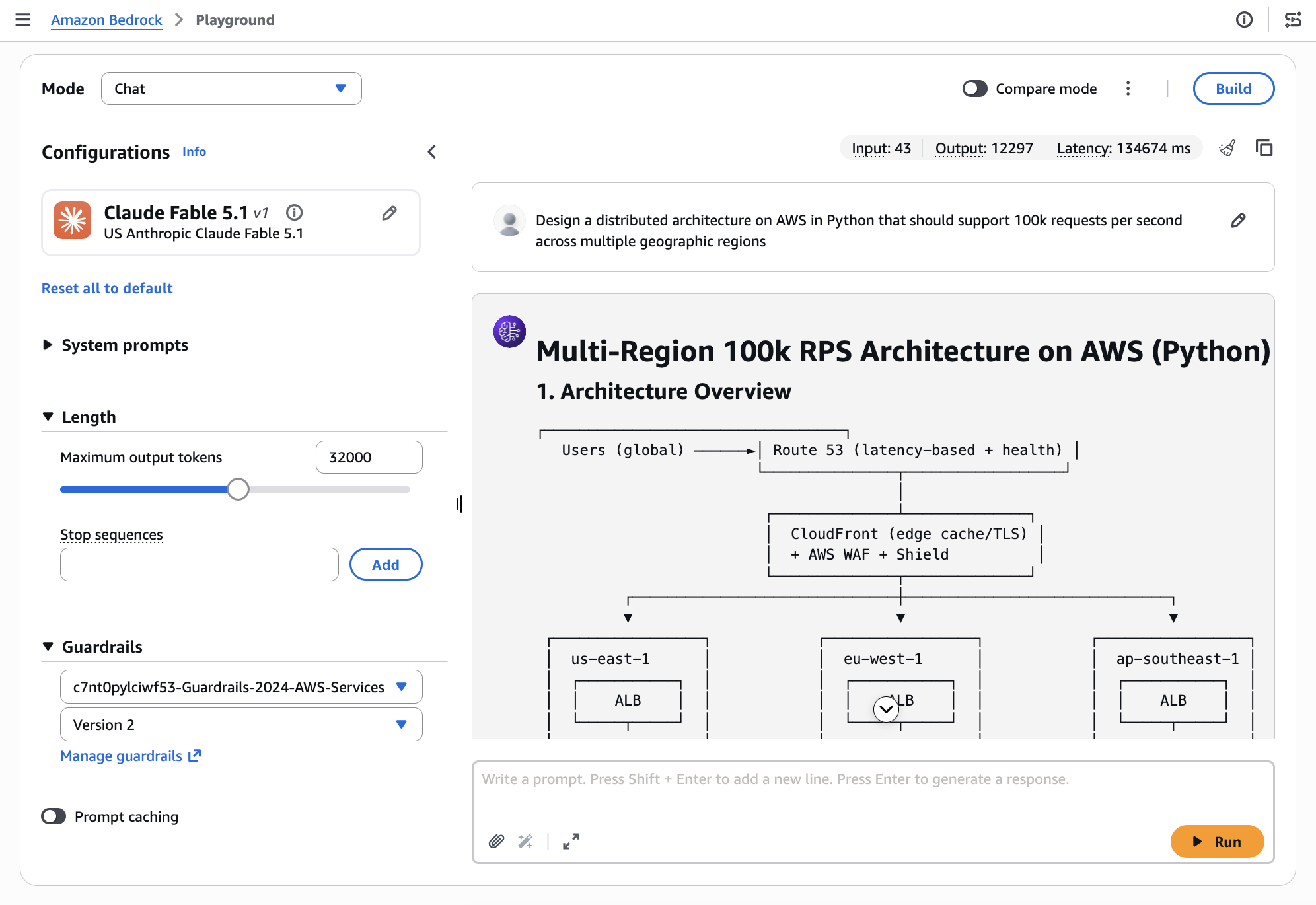
AWS Weekly Roundup: Claude Fable 5.1 on AWS, Amazon Linux 2027 preview, AWS Certified AI Business Strategist, and more (September 7, 2026)

Last week, Claude Fable 5.1 became available on AWS. According to Anthropic, Claude Fable 5.1 delivers frontier intelligence for ambitious tasks across coding, scientific research, and enterprise workflows. Claude Fable 5.1 is built for long-running, high-stakes work that runs for hours and spans many applications. It can own more of a software project on its own, handling features across an entire codebase, code review, and performance work over extended sessions.

Anthropic has designated Fable 5.1 a Covered Model, a category of Claude models that carry additional data retention, safety review, and access policies wherever they’re offered. Claude Fable 5.1 is subject to data retention for up to 30 days and human review by Amazon personnel, with a new aws_review data retention mode. In this mode, AWS retains your prompts and outputs for human safety review within the AWS boundary. The provider_data_share mode is legacy, and Amazon Bedrock does not share your data with the model provider. In addition, Enterprise Frontier Safeguards (EFS), built in partnership between AWS and Anthropic, will let eligible customers use Covered Models while keeping their data in a cloud environment they control.

You have two ways to access Claude Fable 5.1: Amazon Bedrock and Claude Platform on AWS. To learn more, see the Claude Fable 5.1 model card on Amazon Bedrock and Claude Platform on AWS.

Last week’s launches
Here are some launches that got my attention:

  • Amazon Linux 2027 (AL2027) in public preview: AL2027 is the next version of the Amazon Linux operating system. It runs on kernel 7.1+, purpose-built for cloud-native workloads on AWS with performance, scale, and security in mind. Built on AL2023’s baseline, AL2027 is designed for customers who need a secure, stable, and AWS-native operating system running web applications, databases, containerized microservices, AI/ML workloads, and large-scale infrastructure.
  • Amazon EC2 R9g and R9gd memory-optimized instances: These instances are powered by AWS Graviton5 processors, delivering the best price performance for memory-intensive workloads running on Amazon EC2. R9g and R9gd instances deliver up to 25% better compute performance compared to AWS Graviton4-based R8g and R8gd instances. They are up to 30% faster for databases, up to 35% faster for web applications, and up to 35% faster for machine learning. To learn more, read Daniel’s blog post.
  • AWS Lambda SnapStart for container image functions: Lambda SnapStart is an opt-in capability that makes it easier for you to build highly responsive and scalable applications without provisioning resources or implementing complex performance optimizations. Previously, SnapStart was only supported for managed runtimes (Python, .NET, and Java). You can now use SnapStart for container images to reduce startup times from several seconds to as low as sub-second for latency-sensitive workloads such as ML inference and interactive APIs.
  • AWS Agent Registry now generally available: AWS Agent Registry provides a private, governed catalog and discovery layer for agents, tools, skills, MCP servers, and custom resources within your organization. In addition to the capabilities launched in preview (manual and URL-based record creation, approval workflows, semantic and keyword search, and AWS CloudTrail audit trails), Registry now adds new enterprise features. To learn more, visit the AI Blog post.
  • Amazon Redshift now supports Apache Iceberg v3 tables: You can read from and write to Apache Iceberg v3 tables in your data lake of Amazon Redshift. With this launch, Amazon Redshift introduces support for default column values, row lineage, and deletion vectors. Amazon Redshift’s Graviton based provisioned and serverless clusters support the new v3 format. To learn more, visit Apache Iceberg v3 features in Redshift.

For a full list of AWS announcements, be sure to keep an eye on the What’s New with AWS page.

Other AWS news
Here are some additional projects and news items you may find interesting:

  • AWS named a Leader in the 2026 Gartner Magic Quadrant for Strategic Cloud Platform Services: For the 16th consecutive year, Gartner has recognized AWS as a Leader in the 2026 Gartner Magic Quadrant for Strategic Cloud Platform Services, and once again placed AWS highest on the Ability to Execute axis. We believe this recognition reflects our commitment to delivering the broadest and deepest set of cloud capabilities from infrastructure and AI to security and operations, so you can build, innovate, and scale with confidence.
  • AWS Certified AI Business Strategist: This new certification targets professionals who evaluate, champion, and scale AI initiatives in their organizations: line-of-business leaders driving adoption across their teams, sales professionals articulating AI value to customers, consultants guiding client strategy from experimentation through production, program managers aligning AI investments to business outcomes. Beta exam registration opened September 1, 2026, with exam delivery beginning September 29.
  • Agentic Security: Detection and Response at Machine Speed: We believe security should evolve ahead of AI adoption, not behind it. That belief drove our team to collaborate with the SANS Institute on a new chapter in the 2026 Cloud Security Exchange eBook, where we lay out a practical framework for securing agentic workloads at enterprise scale. Our chapter goes deeper on securing agentic workloads, with specific architectural patterns, implementation guidance, and frameworks for security teams at every stage of agentic AI maturity, whether you’re evaluating, piloting, or operating at scale.

For a full list of AWS blog posts, be sure to keep an eye on the AWS Blogs page.

Learn more about AWS, browse and join upcoming AWS-led in-person and virtual events, startup events, and developer-focused events including AWS re:Invent, AWS Summits, and AWS Community Days. Join the AWS Builder Center to connect with builders, share solutions, and access content that supports your development.

That is all for this week. Check back next Monday for another Weekly Roundup!

— Channy

  •  

AWS Weekly Roundup: AWS Transform at 1 year, Claude Platform on AWS, EC2 M3 Ultra Mac instances, and more (May 18, 2026)

Just a year ago, we launched AWS Transform for .NET, Mainframe and VMware workloads, the first agentic AI service purpose-built for modernizing enterprise applications at scale. At re:Invent 2025, we introduced AWS Transform custom, which enables organizations to modernize and transform code at scale using AWS-managed and custom transformations. You can upgrade language versions, migrate frameworks, optimize performance, and analyze code bases using transformations that are ready to use or can be customized to meet your organization’s specific requirements. We also introduced full-stack Windows modernization capabilities and Reimagine capabilities and automated testing functionality for mainframe.

In 12 months, thousands of customers migrated hundreds of thousands of servers, saved 1.6+ million hours, and processed 4.5+ billion lines of code with AWS Transform. Celebrating its 1-year anniversary, AWS Transform agents now available in Kiro, Claude, Cursor, and Codex, including the agent builder toolkit Kiro power for building customized transformation agents.

To learn what happened in 12 months, the four things we learned, and how that evolved our roadmap, visit the one-year anniversary blog post.

Last week’s launches
Here are last week’s launches that caught my attention:

  • The general availability of Claude Platform on AWS – You can get direct access to Anthropic’s native Claude Platform experience, including APIs, console, and early-access beta features, directly through your existing AWS account, without managing separate accounts, billing, or tracking. Claude Platform on AWS is operated by Anthropic, and customer data is processed outside the AWS security boundary. To learn more, visit the deep dive blog post.
  • Amazon EC2 M3 Ultra Mac instances – These instances are built on Apple M3 Ultra Mac Studio computers featuring a 28-core CPU, 60-core GPU, 32-core Neural Engine, and 256GB of unified memory. Compared to EC2 M4 Max Mac instances, M3 Ultra Mac instances provide 2x the unified memory, 1.75x the CPU cores, 1.5x the GPU cores, and 2x the Neural Engine cores, giving Apple developers the headroom to run significantly more Xcode simulators in parallel and accelerate on-device ML workflows to improve product time to market.
  • Amazon Redshift RG instances powered by AWS Graviton – These instances deliver better performance, running data warehouse and data lake workloads up to 2.4x as fast as previous generation RA3 instances, at 30% lower price per vCPU. RG instances include Redshift’s custom-built vectorized data lake query engine that processes Apache Iceberg and Parquet data on your cluster nodes.
  • Amazon Bedrock Advanced Prompt Optimization – You can optimize your prompts for any model on Bedrock, while comparing your original prompts to your optimized prompts across up to 5 models simultaneously. You can also use this if you are migrating to a new model or just want to get better performance on your current model.
  • AWS Security Agent full repository code scanning (preview) – You can use a new capability in AWS Security Agent that performs deep, context-aware security analysis of your entire codebase. When vulnerabilities are found, the scanner generates code remediation—specific fixes tied to the exact file and line—enabling teams to remediate security vulnerabilities faster than ever before. This capability is available at no additional charge for existing AWS Security Agent customers during the preview.
  • AWS Interconnect – multicloud connectivity with Oracle Cloud Infrastructure (preview) – You can quickly provision resilient, scalable private connections to other cloud providers using AWS Interconnect – multicloud connectivity. OCI is the latest CSP to adopt the open specification that powers AWS Interconnect. This allows AWS to provide a consistent, simple experience to our customers on OCI (preview), Google Cloud (generally available), and Microsoft Azure (coming later in 2026).

Additional updates
Here are some additional news items that you might find interesting:

  • Accelerate AI research and education with Build on Trainium program – Read how the next generation of AI researchers is using Amazon chips to accelerate discovery. AWS invested $110 million to give university researchers access to purpose-built AI chips. AWS Trainium is speeding up AI research at UC Berkeley, MIT, Carnegie Mellon, and more. All research is open source, meaning improvements flow back to the broader developer community.
  • A full list of AWS Community Days 2026 – There’s something different about an event where the speakers are your peers, the organizers are volunteers who do this out of passion, and the agenda was shaped by the community itself. That’s exactly what AWS Community Days are, and they’re happening in cities across every continent, every year.
  • The Kiro Startups Credit program is back – Thousands of founders applied in the first round, and now applications are open again. Apply to receive up to one year of Kiro Pro+ credits automatically applied to your organization’s AWS account.

For a full list of AWS blog posts, be sure to keep an eye on the AWS Blogs page.

Learn more about AWS, browse and join upcoming AWS-led in-person and virtual events, startup events, and developer-focused events including AWS Summits. Join the AWS Builder Center to connect with builders, share solutions, and access content that supports your development.

That’s all for this week. Check back next Monday for another Weekly Roundup!

— Channy

  •  

AWS Weekly Roundup: NVIDIA Nemotron 3 Super on Amazon Bedrock, Nova Forge SDK, Amazon Corretto 26, and more (March 23, 2026)

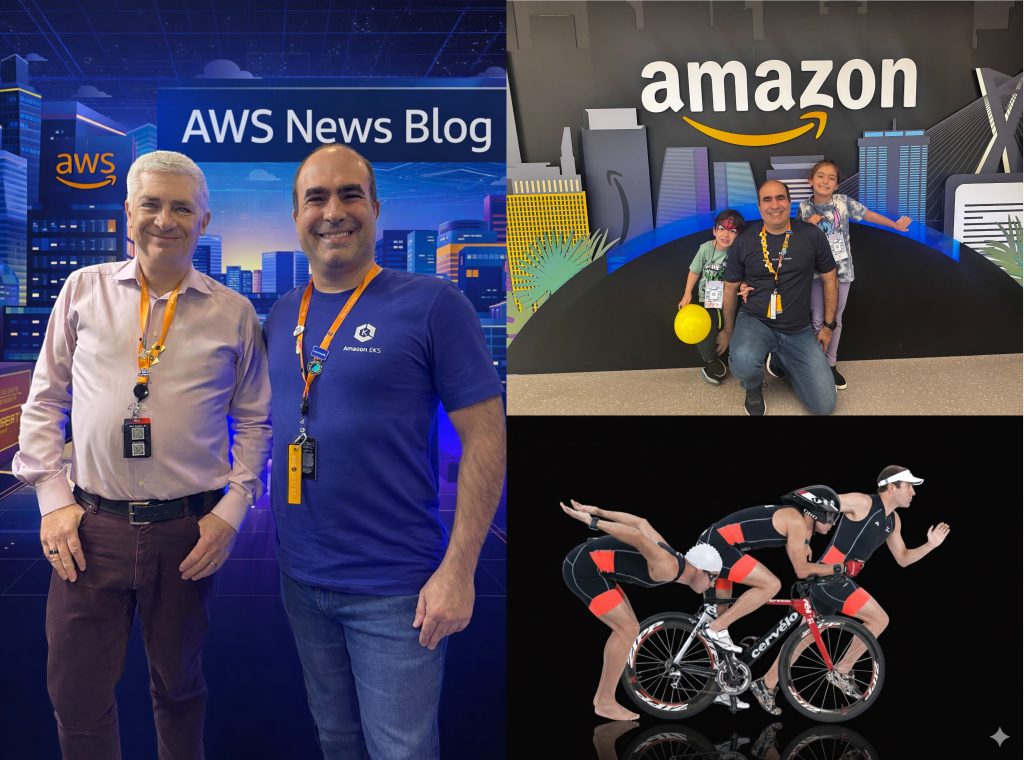
Hello! I’m Daniel Abib, and this is my first AWS Weekly Roundup. I’m a Senior Specialist Solutions Architect at AWS, focused on the generative AI and Amazon Bedrock. With over 28 years of experience in solution architecture, software development, and cloud architecture, I help Startups & Enterprises harness the power of generative AI with Amazon Bedrock. I’ve been at AWS for more than six and a half years, working closely with customers across Latin America, and I’m also passionate about Serverless technologies.

Outside of work and endurance sports, I’m a dedicated father to Cecília (7) and Rafael (4), who keep me busier—and happier— than any distributed system ever could. I’m based in São Paulo, you can find me on LinkedIn and X (@DCABib), where I share insights about generative AI, Amazon Bedrock, AWS serverless services, and the occasional Ironman throwback.

Now, let’s get into this week’s AWS news…

Last week’s launches
Here are some launches and updates from this past week that caught my attention:

  • Amazon Redshift increases performance for new queries in dashboards and ETL workloads by up to 7x — Amazon Redshift now delivers up to 7x faster performance for new queries in dashboards and ETL workloads. Queries you run for the first time — without cached results — now execute significantly faster, reducing wait times for interactive dashboards and accelerating your ETL pipelines. This is particularly impactful for workloads with high query variability where cache hits are less frequent.
  • NVIDIA Nemotron 3 Super now available on Amazon Bedrock — NVIDIA Nemotron 3 Super is now available in Amazon Bedrock, expanding the lineup of foundation models you can access through the unified Bedrock API. Nemotron 3 Super is a high-performance language model optimized for tasks such as text generation, complex reasoning, summarization, and code generation. You can now invoke Nemotron 3 Super alongside other foundation models in your existing Bedrock workflows, without managing any infrastructure.
  • Introducing Nova Forge SDK, a seamless way to customize Nova models for enterprise AI — Nova Forge SDK provides a streamlined way to fine-tune and customize Amazon Nova models for enterprise use cases. You can adapt Nova models to your domain-specific data and deploy them directly within Amazon Bedrock, reducing the complexity of building tailored AI solutions. The SDK handles the heavy lifting of model customization, letting you focus on your business logic rather than the underlying infrastructure.
  • Amazon Corretto 26 is now generally available — Amazon Corretto 26, the latest long-term support (LTS) release of the no-cost, production-ready distribution of OpenJDK, is now generally available. Corretto 26 includes the latest Java language features, performance improvements, and security patches, all backed by long-term support from AWS. You can use it across development and production environments on Amazon Linux, Windows, macOS, and Docker images.
  • AWS Lambda now supports Availability Zone metadata — AWS Lambda now provides Availability Zone metadata for your function invocations. You can now identify which Availability Zone your Lambda function is running in, enabling better observability, more informed architectural decisions, and simplified troubleshooting for latency-sensitive and multi-AZ workloads. This is particularly useful when correlating Lambda execution with other AZ-aware services in your architecture.
  • Amazon CloudWatch Logs now supports log ingestion using HTTP-based protocol — Amazon CloudWatch Logs now supports ingesting logs using an HTTP-based protocol, making it simpler to send logs from applications and services that use standard HTTP endpoints. You can now route logs to CloudWatch Logs without requiring custom agents or additional SDK integrations, lowering the barrier to centralized log management across your workloads.
  • Amazon EKS announces 99.99% Service Level Agreement and new 8XL scaling tier for Provisioned Control Plane clusters — Amazon EKS now offers a 99.99% Service Level Agreement (SLA) for clusters running on Provisioned Control Plane, up from the 99.95% SLA offered on standard control plane. EKS is also introducing the 8XL scaling tier, the largest available Provisioned Control Plane tier, which doubles the Kubernetes API server request processing capacity of the next lower 4XL tier — ideal for large-scale workloads like AI/ML training, high-performance computing (HPC), and large-scale data processing.

Other AWS news
Here are some additional posts and resources that you might find interesting:

  • Kiro for students — Kiro is now available for students, giving the next generation of builders access to AI-powered development tools at no cost. As Swami Sivasubramanian shared on LinkedIn, “Students are the future decision-makers shaping technology” — and Kiro gives them hands-on experience building with AI from day one. If you’re a student or know someone who is, this is a great opportunity to start building with AI-assisted development.
  • Strands Steering Hooks achieved 100% agent accuracy — The Strands Agents team published results showing that Steering Hooks can achieve 100% agent accuracy, outperforming both prompt engineering and rigid workflow approaches for controlling agent behavior. As Swami highlighted on LinkedIn, building reliable AI agents often means rethinking how we guide model behavior — and Steering Hooks offer a compelling new path to agent reliability.
  • Introducing Badges on AWS Builder Center — AWS Builder Center now features badges that recognize your contributions and achievements within the builder community. You can earn badges by sharing solutions, participating in challenges, and engaging with fellow builders. It’s a great way to showcase your expertise and track your growth.
  • Keep Building Together: The Power of Community — A thoughtful read on the power of community-driven learning and collaboration in the AWS ecosystem. Whether you’re just getting started with AWS or you’ve been building for years, the builder community is a place to connect, share knowledge, and grow together. I highly recommend checking it out.

Upcoming AWS events
Check your calendar and sign up for upcoming AWS events:

  • AWS Summits — Join AWS Summits in 2026, free in-person events where you can explore emerging cloud and AI technologies, learn best practices, and network with industry peers and experts. Upcoming Summits include Paris (April 1), London (April 22), Bengaluru (April 23–24), Singapore (May 6), Tel Aviv (May 6), and Stockholm (May 7).
  • AWS Community Days — Community-led conferences where content is planned, sourced, and delivered by community leaders, featuring technical discussions, workshops, and hands-on labs. Upcoming events include San Francisco (April 10) and Romania (April 23–24).
  • AWSome Women Summit LATAM — Taking place on March 28 in Mexico City, this event celebrates and empowers women in cloud technology across Latin America. A fantastic initiative for the LATAM tech community.

Join the AWS Builder Center to connect with builders, share solutions, and access content that supports your development. Browse the AWS Events and Webinars for upcoming AWS-led in-person and virtual events and developer-focused events.

That’s all for this week. Check back next Monday for another Weekly Roundup!

This post is part of our Weekly Roundup series. Check back each week for a quick roundup of interesting news and announcements from AWS!

  •  

AWS Weekly Roundup: Amazon S3 turns 20, Amazon Route 53 Global Resolver general availability, and more (March 16, 2026)

Twenty years ago this past week, Amazon S3 launched publicly on March 14, 2006. While Amazon Simple Storage Service is often considered the foundational storage service that defined cloud infrastructure, what began as a simple object storage service has grown into something far larger in scope and scale.

As of March 2026, S3 stores more than 500 trillion objects, serves more than 200 million requests per second globally across hundreds of exabytes of data, and the price has dropped to just over 2 cents per gigabyte — an approximately 85% reduction since launch. My colleague Sébastien Stormacq wrote a detailed look at the engineering and the road ahead in Twenty years of Amazon S3 and building what’s next, and if you want to read about those earliest customers and how they shaped what AWS became, I recommend How three startups helped Amazon invent cloud computing and paved the way for AI. Twenty years is worth pausing to celebrate.

Alongside the 20th anniversary of S3, Channy Yun also wrote about a new S3 feature this week: Account regional namespaces for Amazon S3 general purpose buckets. With this feature, you can create general purpose buckets in your own account regional namespace by appending your account’s unique suffix to your requested bucket name, ensuring your desired names are always reserved exclusively for your account. You can enforce adoption across your organization using AWS IAM policies and AWS Organizations service control policies with the new s3:x-amz-bucket-namespace condition key. Read Channy’s post to learn more about account regional namespaces for Amazon S3 general purpose buckets.

This week’s featured launch is one I have a personal connection to: the general availability of Amazon Route 53 Global Resolver. I wrote about the preview of this capability back in December at re:Invent 2025, and I had a great time putting that post together, so I am happy to hear that it’s generally available now.

Amazon Route 53 Global Resolver is an internet-reachable anycast DNS resolver that provides DNS resolution for authorized clients from any location. It is now generally available across 30 AWS Regions, with support for both IPv4 and IPv6 DNS query traffic. Route 53 Global Resolver gives authorized clients in your organization anycast DNS resolution of public internet domains and private domains associated with Route 53 private hosted zones — from any location, not just from within a specific VPC or Region. It also provides DNS query filtering to block potentially malicious domains, domains that are not safe for work, and domains associated with advanced DNS threats such as DNS tunneling and Domain Generation Algorithms (DGA). Centralized query logging is included as well. With general availability, Global Resolver adds protection against Dictionary DGA threats.

Last week’s launches
Here are some of the other announcements from last week:

  • Amazon Bedrock AgentCore Runtime now supports stateful MCP server features — Amazon Bedrock AgentCore Runtime now supports stateful Model Context Protocol (MCP) server features, enabling developers to build MCP servers that use elicitation, sampling, and progress notifications alongside existing support for resources, prompts, and tools. With stateful MCP sessions, each user session runs in a dedicated microVM with isolated resources, and the server maintains session context across multiple interactions using an Mcp-Session-Id header. Elicitation enables server-initiated, multi-turn conversations to gather structured input from users during tool execution. Sampling allows servers to request LLM-generated content from the client for tasks such as personalized recommendations. Progress notifications keep clients informed during long-running operations. To learn more, see the Amazon Bedrock AgentCore documentation.
  • Amazon WorkSpaces now supports Microsoft Windows Server 2025 — New bundles powered by Microsoft Windows Server 2025 are now available for Amazon WorkSpaces Personal and Amazon WorkSpaces Core. These bundles include security capabilities such as Trusted Platform Module 2.0 (TPM 2.0), Unified Extensible Firmware Interface (UEFI) Secure Boot, Secured-core server, Credential Guard, Hypervisor-protected Code Integrity (HVCI), and DNS-over-HTTPS. Existing Windows Server 2016, 2019, and 2022 bundles remain available. You can use the managed Windows Server 2025 bundles or create a custom bundle and image. This support is available in all AWS Regions where Amazon WorkSpaces is available. For more information, visit the Amazon WorkSpaces FAQs.
  • AWS Builder ID now supports Sign in with GitHub and Amazon — AWS Builder ID now supports two additional social login options: GitHub and Amazon. These options join the existing Google and Apple sign-in capabilities. With this update, developers can access their AWS Builder ID profile — and services including AWS Builder Center, AWS Training and Certification, and Kiro — using their existing GitHub or Amazon account credentials, without managing a separate set of credentials. To learn more and get started, visit the AWS Builder ID documentation.
  • Amazon Redshift introduces reusable templates for COPY operations — Amazon Redshift now supports templates for the COPY command, allowing you to store and reuse frequently used COPY parameters. Templates help maintain consistency across data ingestion operations, reduce the effort required to execute COPY commands, and simplify maintenance by applying template updates automatically to all future uses. Support for COPY templates is available in all AWS Regions where Amazon Redshift is available, including the AWS GovCloud (US) Regions. To get started, see the documentation or read the Standardize Amazon Redshift operations using Templates blog.

For a full list of AWS announcements, be sure to keep an eye on our News Blog channel the What’s New with AWS page.

Upcoming AWS events
Check your calendar and sign up for upcoming AWS events:

AWS Summits – Join AWS Summits in 2026, free in-person events where you can explore emerging cloud and AI technologies, learn best practices, and network with industry peers and experts. Upcoming Summits include Paris (April 1), London (April 22), and Bengaluru (April 23–24).

AWS Community Days – Community-led conferences where content is planned, sourced, and delivered by community leaders, featuring technical discussions, workshops, and hands-on labs. Upcoming events include Pune (March 21), San Francisco (April 10), and Romania (April 23-24).

AWS at NVIDIA GTC 2026 — Join us at our AWS sessions, booths, demos, and ancillary events in NVIDIA GTC 2026 on March 16 – 19, 2026 in San Jose. You can receive 20% off event passes through AWS and request a 1:1 meeting at GTC.

AWS Community GameDay Europe — Taking place on March 17, 2026, AWS Community GameDay Europe is a team-based, hands-on AWS challenge event running simultaneously across 50+ cities in Europe. Your team is dropped into a broken AWS environment — misconfigured services, failing architectures, and security gaps — and has two hours to fix as much as possible. Find your nearest city and sign up at awsgameday.eu.

Join the AWS Builder Center to connect with builders, share solutions, and access content that supports your development. Browse here for upcoming AWS-led in-person and virtual events and developer-focused events.

That’s all for this week. Check back next Monday for another Weekly Roundup!

— Esra

This post is part of our Weekly Roundup series. Check back each week for a quick roundup of interesting news and announcements from AWS!

  •  
❌