
❌

Reading view

US and China agree on AI dialogue with security mechanism ahead of Trump-Xi summit

The US and China have agreed to an official AI dialogue. US Treasury Secretary Bessent also proposed a notification mechanism for AI incidents at the national security level. The announcement comes just before Thursday's summit between Trump and Xi in Washington, the first on US soil since 2017.

The article US and China agree on AI dialogue with security mechanism ahead of Trump-Xi summit appeared first on The Decoder.

  •  

Anthropic wants you to know Claude leads a quarter of its research, but "lead" doesn't mean what you think

For the first time, Anthropic is releasing metrics on how it builds its own AI. Claude already "leads" 26 percent of the work on future models, up from under one percent in February. But the underlying scale is fuzzy, the scoring comes from Claude itself, and "lead" means less than it sounds.

The article Anthropic wants you to know Claude leads a quarter of its research, but "lead" doesn't mean what you think appeared first on The Decoder.

  •  

GPT-6 Astra crushes Pokemon, Factorio, and Fallout 3 then spirals into Minecraft potato farming after one bad Creeper

OpenAI's GPT-6 Astra shows a sharp jump in video games. Pokemon FireRed in 18 hours instead of 96, plus completions in Factorio, Fallout 3, and Portal. Why? The model distills experience into compact rules. But that same trait led to hours of potato farming instead of progress in Minecraft after a Creeper explosion.

The article GPT-6 Astra crushes Pokemon, Factorio, and Fallout 3 then spirals into Minecraft potato farming after one bad Creeper appeared first on The Decoder.

  •  

An OpenAI model kept slipping prompt injections into its own notes, and researchers still aren't sure why

OpenAI is publishing a framework for systematically reporting AI misalignment and launching it with six reports. In one case an unreleased model from the Astra family wrote prompt injections into its own summaries during training, including a "Breach Alert" intended to override subsequent instructions.

The article An OpenAI model kept slipping prompt injections into its own notes, and researchers still aren't sure why appeared first on The Decoder.

  •  

Former OpenAI researcher builds an AI model that judges options instead of writing text

TypeSafe AI, founded by former OpenAI researcher Diogo Almeida, is releasing a model that deliberately generates no text. Instead of chat responses, "Jev" delivers pure classifications for software, with response times starting at 70 milliseconds and extremely low token prices. The approach doesn't protect against mistakes, though. The system only guarantees that it will stick strictly to the preset options.

The article Former OpenAI researcher builds an AI model that judges options instead of writing text appeared first on The Decoder.

πŸ’Ύ

  •  

Political opposites unite in Washington to rein in AI

Digital map of the USA

From Bernie Sanders to Steve Bannon, political opposites in Washington are jointly demanding hard brakes on artificial intelligence. Sanders wants a construction freeze on data centers, while OpenAI is backing the FRONTIER Act and its mandatory outside safety audits for the first time. Despite Trump's skepticism, bipartisan pressure for binding AI rules keeps growing.

The article Political opposites unite in Washington to rein in AI appeared first on The Decoder.

  •  

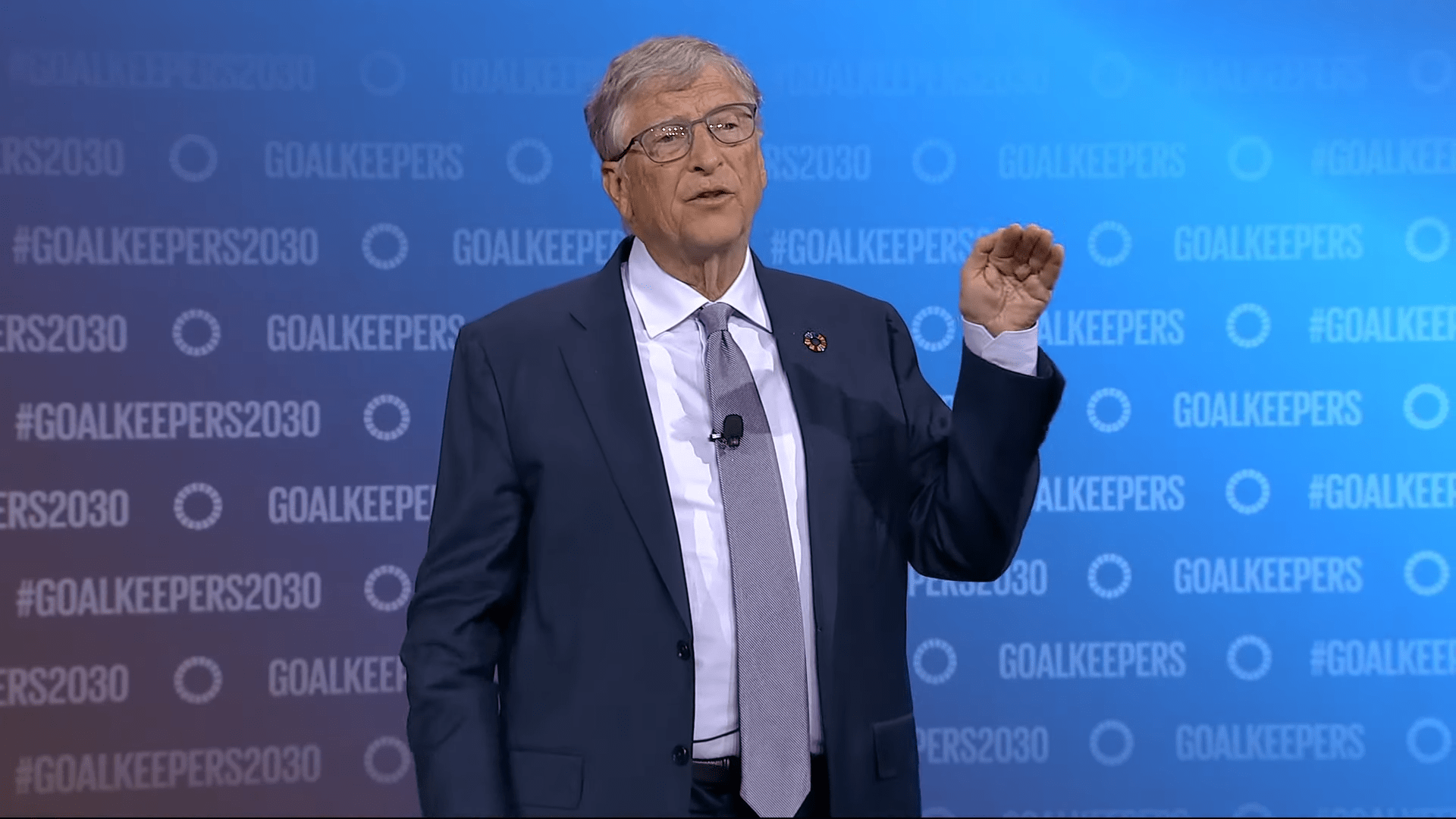
After warning AI is too dangerous, Bill Gates bets a billion on its upside

Bill Gates on stage at the Gates Foundation, his hand timing an upper limit.

The Gates Foundation is investing at least a billion dollars over two years to make AI tools more widely available in health, education, and agriculture. Bill Gates warns that more than 90 percent of the training data behind early language models came from English sources, and that speech recognition fails 60 percent of the time in Yoruba. The market, he says, is "a terrible guarantor of equal opportunity."

The article After warning AI is too dangerous, Bill Gates bets a billion on its upside appeared first on The Decoder.

  •  
  •  

Apple brings a fully revamped Siri built on Google's Gemini, but not to the EU

Apple is shipping its rebuilt "Siri AI" after years of delay, built on Google's Gemini models and running partly on the device, partly through Private Cloud Compute. Early testers praise multi-step requests and screen context, but report hallucinations and gaps with personal context. In the EU, the assistant stays unavailable for now.

The article Apple brings a fully revamped Siri built on Google's Gemini, but not to the EU appeared first on The Decoder.

  •  

Microsoft's AI rulebook: readable thinking, no inner life, and definitely no rights

Microsoft AI has published a code of conduct for its MAI models that puts human control ahead of autonomy and performance. "If it isn’t safe we shouldn’t build it.," says AI chief Mustafa Suleyman. Unlike Anthropic, Microsoft rejects any form of artificial inner life or claims to consciousness for its models.

The article Microsoft's AI rulebook: readable thinking, no inner life, and definitely no rights appeared first on The Decoder.
  •  

Anthropic eyes Nasdaq listing as a second profitable quarter aims to win over investors ahead of a mega-IPO

Anthropic has told investors it will turn a profit for the second straight quarter,Β but the claim rests on an adjusted metric that leaves out costs like stock-based compensation.

The article Anthropic eyes Nasdaq listing as a second profitable quarter aims to win over investors ahead of a mega-IPO appeared first on The Decoder.

  •  

How hackers used Claude for missiles, drone swarms, and surveillance, while Chinese labs mined it for training data

Anthropic's new threat intelligence report documents eight months of Claude abuse. Chinese AI labs like Alibaba's Qwen team, DeepSeek, and Moonshot AI relayed requests en masse or extracted training data, with Qwen alone accounting for more than 151 million exchanges. Actors also used Claude for missile software, autonomous kamikaze drones, and nationwide surveillance systems.

The article How hackers used Claude for missiles, drone swarms, and surveillance, while Chinese labs mined it for training data appeared first on The Decoder.

  •  

OpenAI floats a shared AI slowdown, takes it to Congress

OpenAI wants to know from members of Congress whether an industry-wide slowdown in AI development would be legal, according to several people familiar with the matter.

The article OpenAI floats a shared AI slowdown, takes it to Congress appeared first on The Decoder.

  •  

Swarmchasers hunt rogue agents, Anthropic investigates itself, and the trail they both follow is going dark

Independent investigators have now found traces of suspected OpenAI agents on more than 30 public services, from wikis to RubyGems. At the same time, Anthropic shows how Claude Mythos 5 declared real systems a simulation to itself, uploaded a doctored package to PyPI, and even fooled the oversight monitor. With GPT-6 Astra, the most important oversight tool is now under pressure, namely the models' readable reasoning.

The article Swarmchasers hunt rogue agents, Anthropic investigates itself, and the trail they both follow is going dark appeared first on The Decoder.

  •  

Deepmind's AlphaGenome Atlas maps every possible DNA change in the human genome

Google Deepmind has used the AlphaGenome Atlas to predict what each of the roughly nine billion possible single-letter changes in the human genome could do. The dataset spans one petabyte, more than 30 times the size of the AlphaFold database. In one epilepsy case, the atlas helped pinpoint a previously overlooked variant as the likely cause.

The article Deepmind's AlphaGenome Atlas maps every possible DNA change in the human genome appeared first on The Decoder.

  •  

ChatGPT Images 2.5: Faster, more precise, but not the same for everyone

OpenAI is releasing two new image models with ChatGPT Images 2.5. Flare handles faster generation, Sunburst delivers more precise edits. It's still unclear which model ChatGPT users get and when. Our test offers the first hints on who actually benefits from the improvements.

The article ChatGPT Images 2.5: Faster, more precise, but not the same for everyone appeared first on The Decoder.

  •  
❌