
 Login
Login
Fine-Tuning Biological Foundation Models with LoRA Using NVIDIA BioNeMo Recipes
 Foundation models are reshaping computational biology. Pretrained on massive corpora of protein or genomic sequences, models such as ESM2 (a protein language...
Foundation models are reshaping computational biology. Pretrained on massive corpora of protein or genomic sequences, models such as ESM2 (a protein language model) and Evo 2 (a DNA language model) capture statistical regularities of biological sequences. These transfer well to a wide range of downstream tasks, including structure prediction, variant effect, and functional annotation.
 As AI infrastructure scales, enterprise expectations for operational maturity are increasing. Organizations expect these systems to be provisionable,...
 This post is the third of a three-part series. See also Model Quantization: Concepts, Methods, and Why It Matters and Model Quantization: Post-Training...
 Federated learning (FL) research often begins with a deceptively simple question: What should we try next? A new aggregation rule, a FedProx coefficient, a...
 Developers can now use NVIDIA CUDA Tile programming within large existing C++ GPU codebases to develop highly optimized GPU kernels using tile-based...
 NVIDIA CompileIQ tackles one of the hardest problems in performance engineering: finding the compiler options that unlock the best performance for a specific...
 This post is the second of a three-part series. See also Model Quantization: Concepts, Methods, and Why It Matters and Model Quantization: Turn FP8 Checkpoints...
 Distributed deep learning depends on fast, reliable GPU-to-GPU communication using the NVIDIA Collective Communication Library (NCCL). When training slows down,...
 Modern supply chains operate under the constant pressures of fluctuating demand, volatile costs, constrained capacity, and interdependent decision-making....
 NVIDIA CUDA Tile (cuTile) is a tile-based programming model that enables developers to write GPU kernels in terms of tile-level operations—loads, stores, and...
 For decades, computational biology has operated under a reductionist compromise. To fit complex biological systems into the limited memory of a single GPU,...
 The subsurface industry is at a critical point in its digital evolution. For decades, unlocking reservoir potential has relied on experts performing essential...
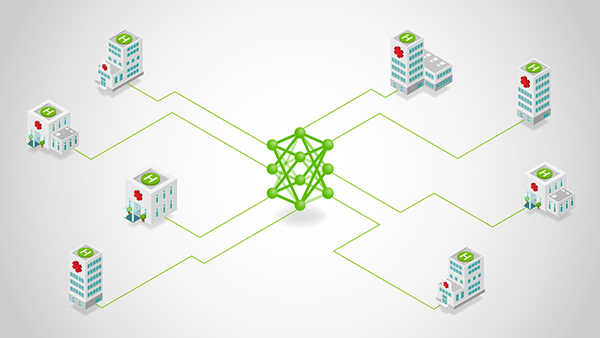 Federated learning (FL) is no longer a research curiosity—it’s a practical response to a hard constraint: the most valuable data is often the least movable....
 In March 2026, three LLM agents generated over 600,000 lines of code, ran 850 experiments, and helped secure a first-place finish in a Kaggle playground...
 As LLMs transition from simple text generation to complex reasoning, reinforcement learning (RL) plays a central role. Algorithms like Group Relative Policy...